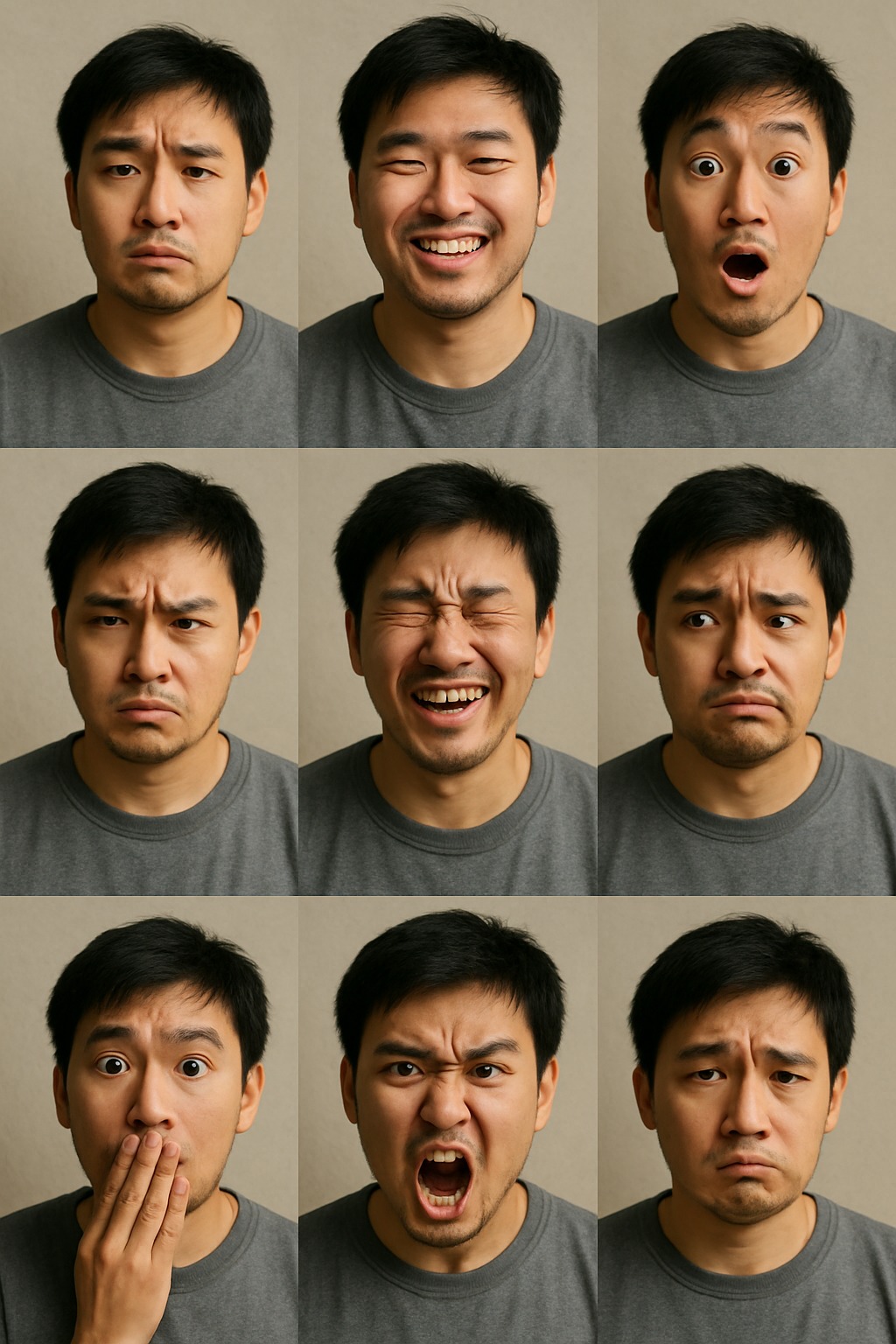
Discussing emotions in gifted individuals requires moving beyond two overly simplistic views. One portrays gifted individuals as especially vulnerable, intense, or difficult to support. The other assumes that higher intellectual ability should translate into almost automatic emotional well-adjustment. The reviewed sources do not clearly support either of these extremes.
Specialized literature presents an old debate between two perspectives: the so-called harmony hypothesis, which associates giftedness with good social and emotional adjustment, and the disharmony hypothesis, which links it to more socio-emotional difficulties. Chung analyzes these two perspectives as frameworks also present in the media, but warns that they do not fully describe the reality of gifted individuals (Chung, 2023). This caution is useful: the same label can coexist with very different trajectories.
This chapter does not offer a clinical interpretation of anxiety, perfectionism, or emotional intensity. The objective is more modest: to organize some frequent ideas from the sources, distinguish between possible traits and problems requiring assessment, and prevent discomfort from becoming a sole explanation.
Emotional Intensity Does Not Mean Disorder
Several sources mention that some gifted individuals may experience emotions with particular intensity, sensitivity, or depth. This includes moral concern, idealism, empathy, a sense of justice, heightened emotional response, or a strong connection to other people, animals, or world problems (Giudice, 2024; Molina García, 2014). In some texts, this description is linked to Dabrowski’s concept of emotional overexcitability (Giudice, 2024).
The nuance is important. That a source describes emotional intensity does not mean that all gifted individuals exhibit it, nor that this intensity is in itself a disorder. Giudice points out that the general theory of positive disintegration, from which part of this vocabulary originates, has limited empirical support (Giudice, 2024). Molina García also includes emotional intensity as a characteristic described by several authors, but insists that the emotional area should be considered alongside the cognitive and social, not as an automatic consequence of giftedness (Molina García, 2014).
An intense emotion can be a source of engagement, creativity, commitment, or sensitivity towards others. It can also generate conflict if the environment does not understand it, if it is interpreted as an exaggeration, or if the person does not find appropriate ways to regulate it. The difference is not only in the emotion itself, but in its duration, its intensity, the context in which it appears, and the degree to which it interferes with daily life.
Perfectionism: Between Useful Demands and Blockage
Perfectionism appears in several sources as a possible concern for some gifted individuals, especially when combined with external expectations, fear of error, or pressure to perform (Giudice, 2024; Kerr, 1991; Molina García, 2014). It is not presented as a universal trait or an identification criterion.
The word can also mean different things. In a broad sense, it can refer to the pursuit of quality, the desire for improvement, or perseverance in a task. Molina García describes a positive dimension when this demand drives improvement and dedication (Molina García, 2014). Chung even uses the term “adaptive perfectionism” within an analysis of media representations, although in his study it functions as an operational code for scenes of adaptation to obstacles, not as a complete psychological theory (Chung, 2023).
In another sense, perfectionism can become rigid. Kerr relates it to very high standards, excessive concern for details, dependence on external evaluation, and difficulty accepting reasonably good results (Kerr, 1991). Giudice also notes the relationship between excessively high standards, fear of making mistakes, anxiety, and possible burnout in certain cases (Giudice, 2024).
Anxiety: Possibility, Not Destiny
Anxiety appears in the sources as a possible difficulty, especially in contexts of pressure, misunderstanding, mismatch between needs and environment, difficult decisions, fear of failure, or constant evaluation (Giudice, 2024; Kerr, 1991; Molina García, 2014). However, none of the sources used allow us to state that giftedness generally causes anxiety.
Giudice cites studies on trait anxiety, emotional dysregulation, and profiles referred for giftedness, but warns that some of this evidence comes from clinical or referred samples, which limits generalization (Giudice, 2024). Molina García mentions anxiety as a socio-affective variable that can be assessed in some cases, along with motivation, self-esteem, adaptation, and personality traits, without presenting it as a defining characteristic (Molina García, 2014). Kerr relates it to academic stress, high expectations, school transitions, test anxiety, and performance in specific areas such as music (Kerr, 1991).
This cautious reading allows the issue to be framed more usefully. It is not about asking whether gifted individuals “are anxious,” but about observing when a specific person is subjected to a combination of demands, expectations, and lack of support that can foster tension or blockage.
The Role of the Environment: Expectations, Challenge, and Support
One idea runs through several sources: emotional difficulties should not be separated from the academic, social, and family context (Kerr, 1991; Molina García, 2014; Giudice, 2024). Sometimes discomfort is better understood by looking at the interaction between the person and their environment: learning pace, type of tasks, peer relationships, family expectations, classroom style, previous experiences of success or failure, and real possibilities for support.
This does not mean blaming the school or the family. It means recognizing that well-being does not depend solely on internal traits. A fast-learning student may get bored with very repetitive tasks; another may feel pressured if every achievement becomes a new benchmark; an adult may experience burnout if they maintain impossible standards for years. In each case, the same initial trait can have different effects depending on the context.
Kerr notes that many gifted individuals are well-adjusted, although some may experience difficulties related to boredom, isolation, expectations, or lack of challenge (Kerr, 1991). Molina García insists that the educational response must address psychological and social needs, not just intellectual ones (Molina García, 2014). Giudice warns that the belief that gifted individuals always adjust well can invisibilize real difficulties (Giudice, 2024).
Therefore, a sensible response usually combines challenge and care. Challenge without support can increase pressure. Support without challenge may fall short if the person needs depth, autonomy, or complexity. The issue is not always to lower demands, but to make them more appropriate, understandable, and humane.
Supporting Without Labeling Emotion
In daily life, supporting these experiences requires a delicate balance. If a girl avoids submitting assignments because they never seem good enough, she may need help to finish, review, and accept a possible outcome. If an adolescent is anxious before a test, it may be useful to explore what meaning they attribute to that test. If an adult describes themselves as intense or sensitive, it is advisable to listen without immediately assuming that this is a problem.
These guidelines do not promise results. They serve to shift the focus from the label to specific needs. Perfectionism, anxiety, or emotional intensity can be part of the experience of some gifted individuals, but they do not define the person or allow for their identification.
Perhaps the most cautious formulation is this: giftedness can coexist with an intense emotional life, with perfectionism, or with anxiety, but the relationship between these elements depends on the person, the context, and other variables. Some sources agree on pointing out risks of pressure, expectations, and maladjustment; they also agree on warning against generalizations (Giudice, 2024; Kerr, 1991; Molina García, 2014). This double caution best protects rigorous dissemination: taking discomfort seriously without turning it into destiny.
Sources Used
- Chung, D. (2023). Portrayal of Gifted Stereotypes in Disney Channel Media: Harmony or Disharmony? Journal of Student Research, 12(3), 1-16.
- Giudice, A. (2024). Brief introduction of giftedness in adults. Preprint. https://doi.org/10.13140/RG.2.2.16087.48804
- Kerr, B. (1991). A Handbook for Counseling the Gifted and Talented. American Association for Counseling and Development.
- Molina García, L. (2014). Curricular adaptations for gifted students from tutoring. IC Editorial.